
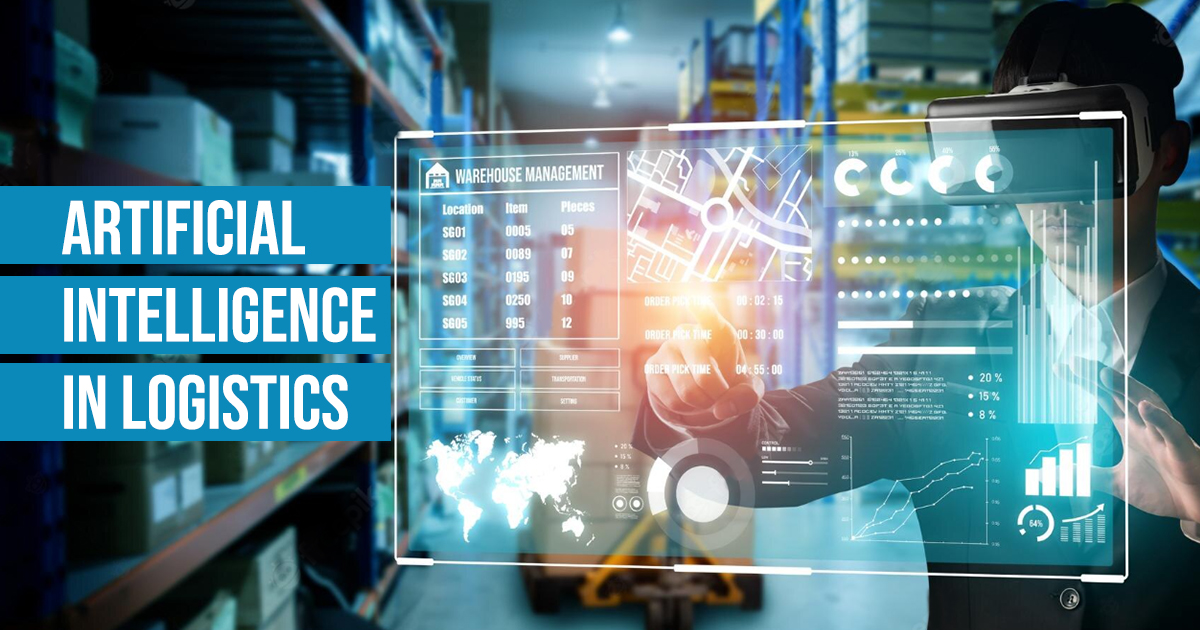
The emergence of cutting-edge technologies and industry disruptions have caused a significant transformation in the logistics sector in recent years. Among these, artificial intelligence (AI) has become a disruptive force that is transforming how businesses optimize and manage their supply networks. AI is a vital tool in the logistics industry because of its capacity to process enormous volumes of data, make wise judgments, and forecast results. Not surprisingly, by 2025, artificial intelligence (AI) and machine learning (ML) will be the most likely technologies to be used.
Even though artificial intelligence (AI) offers many uses and benefits in logistics, many businesses still fall short of realizing AI’s full potential because they overlook the most important aspect of their digital transformation: a shift in attitude and behavior.
Use Robotics And Automation In Warehouses To Achieve True Artificial Intelligence
Automation in warehouses has advanced significantly as a result of the combination of robotics and artificial intelligence. Order fulfillment can be accelerated by using AI-powered robots to efficiently sort, choose, pack, and arrange items. Robots can execute many of the duties that warehouse people do, demonstrating how “artificial” the intelligence is. AI-powered sensors and cameras also make it possible to track and monitor inventory in real time, which improves inventory management and lowers losses. As a result, the warehouse is overflowing with fresh, real-time data that may be utilized for predictive analytics and better process controls. Because of this, AI-powered warehouse automation has turned conventional warehouses into effective, state-of-the-art distribution hubs that can enhance the customer experience while meeting the speed of fulfillment required in today’s consumer climate.
“Many companies, scrambling to find workers amid the lowest U.S. unemployment rate since 1969, see automation as a quick fix.” The automation of warehouses is particularly important at a time when there is a shortage of warehouse workers, the threat of union strikes, and the rising cost of human labor. Therefore, using this AI in conjunction with robotics is now required rather than an option. Just under half of medium-sized to big warehouse and fulfillment center owners in the United States will deploy robots by 2024.
Humans’ Primary Function Is Still Transportation
The situation is slightly different in Transportation. The transportation process still revolves around the human. However, a lot of people are unsure if ChatGPT and AI in general will replace them in their employment. When questioned about ChatGPT’s and AI’s function in transportation, ChatGPT responded, “It is important to note that while ChatGPT can provide valuable assistance and support in the freight industry, human expertise and oversight remain crucial.”
In the context of transportation, I personally refer to AI as “Augmented” Intelligence since it enables humans to be more productive, manage greater volumes, complete tasks more quickly, and produce higher-quality results. Additionally, the individual will ultimately enjoy their work more, which aids businesses in attracting and retaining critical talent. Therefore, businesses should use AI to help transportation workers in their day-to-day tasks.
Utilize Visibility As A Primary AI Candidate
Supply chain visibility aids in risk management, fosters efficient stakeholder engagement and communication, and continues to be a crucial area for businesses to invest in. Natural disasters, labor shortages, geopolitical unrest, and unplanned disruptions are just a few of the risks that can affect logistics operations. AI’s predictive powers enable businesses to foresee possible hazards and proactively create backup plans.
These platforms are excellent candidates for the use of AI due to the volume of data they collect. When actual data is unavailable, artificial intelligence (AI) is being used to improve data quality, generate data through generative AI, and offer insightful predictions (such as dwell times or ETAs) or forecasts (such as the capacity of assets or ports). Businesses may communicate information, updates, and projections with partners, suppliers, and customers by putting real-time visibility into practice. Clear communication promotes cooperation, fosters trust, and facilitates prompt decision-making. The supply chain’s agility and robustness are improved by such cooperative efforts.
Using Predictive Analytics To Increase Logistics Efficiency
The tremendous use of AI in predictive analytics, which is driven by the rapid expansion of data, is among its most important contributions to logistics. 181 zetabytes of data—the equivalent of 200 billion iPhone 14s—will be produced by 2025. Larger models that can do increasingly complex tasks can be produced when combined with processing power that is growing exponentially.
AI-powered systems can predict demand trends, inventory swings, and possible disruptions by evaluating previous data and current information. This allows for inventory level optimization, stockout reduction, and supply chain processes to be streamlined. Businesses may increase productivity and customer happiness by precisely predicting demand and ensuring that the proper products are available when and where they are needed. Larger portions of workflows will eventually be automated as predictive analytics develops further into prescriptive analytics.
But Are Businesses Prepared To Use AI To Its Full Potential?
Even though technology has advanced significantly in recent years, supply chain issues cannot be resolved by technology alone. Three essential components are needed for digital transformation: the appropriate combination of technology, modified business models and procedures, and the proper digital talent. Currently, the majority of businesses lack the digital maturity, expertise, and mindset necessary to fully benefit from AI. Instead of focusing on the past, businesses must shift their focus to the future and begin utilizing real-time and predictive analytics. They must have faith in the data that gives them these insights so they can make decisions quickly and carry them out. Only then can digital transformation be accomplished and actual change occur.