
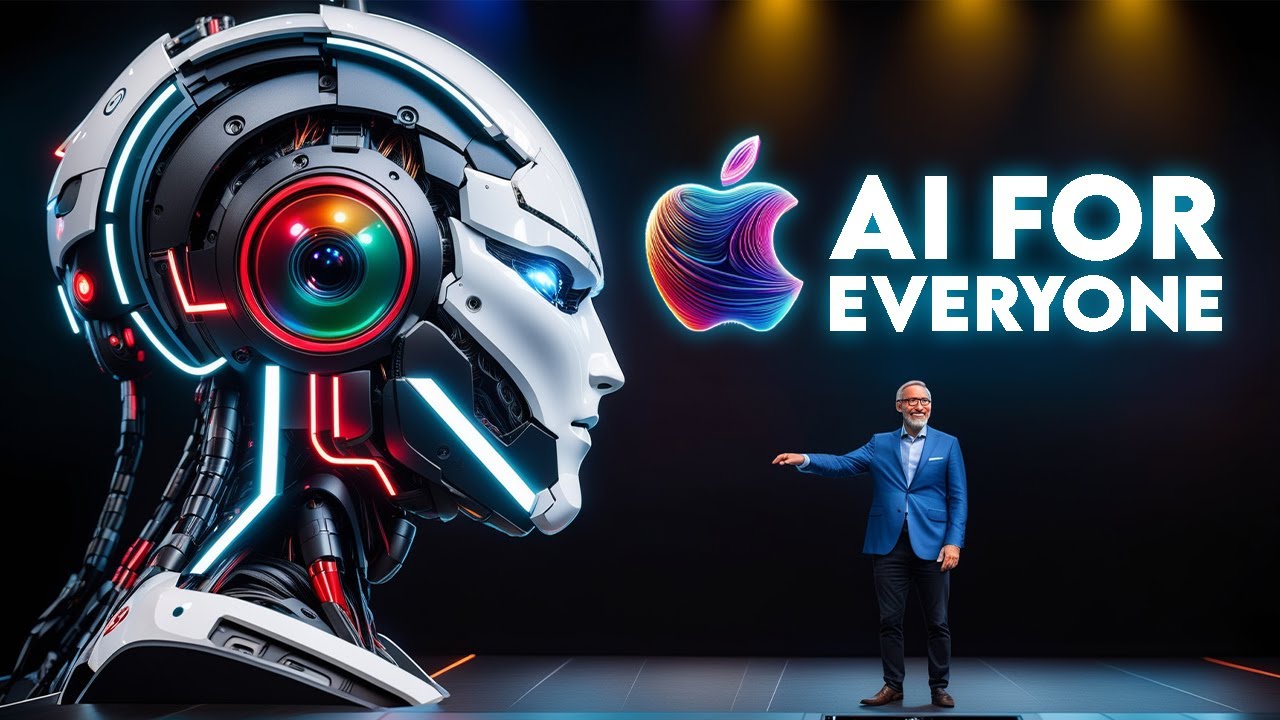
According to Bloomberg, Apple has relocated seasoned executive Kim Vorrath to supervise enhancements to Siri and AI capabilities, demonstrating the company’s strong artificial intelligence initiatives. This shift coincides with Apple’s plans to significantly improve Siri in order to compete with more sophisticated AI helpers like ChatGPT. These upgrades will include a more conversational interface and better app integration.
The Shift Of Siri To LLM Technology
Internally called “LLM Siri,” Apple is creating a new version of Siri that uses large language models to improve conversational skills. Like Google’s Gemini and OpenAI’s ChatGPT, this update attempts to make Siri more responsive and able to handle complex requests. Important enhancements include of:
Improved comprehension of context and more natural dialogue.
The capacity to comprehend unclear questions and multi-step procedures.
Better accessibility and multilingual support
Text generation and summary integration with Apple Intelligence.
Apple intends to reveal the redesign as part of the iOS 19 and macOS 16 updates, codenamed “Luck” and “Cheer,” respectively, even though the complete consumer release is anticipated in the spring of 2026. With this change, Apple’s AI strategy has evolved significantly, putting Siri in a better position to compete with other cutting-edge virtual assistants on the market.
Kim Vorrath’s Contribution To The AI Revolution
A major position in Apple’s AI division has been assigned to Kim Vorrath, a 36-year Apple veteran who is renowned for handling intricate software projects and repairing problematic products. Vorrath will concentrate on enhancing Apple’s internal AI models and updating Siri’s underlying infrastructure in his role as top deputy to AI chief John Giannandrea. It is anticipated that her proficiency in arranging engineering teams and developing effective workflows will instill greater discipline in Apple’s AI initiatives.
Apple’s determination to catching up to rivals in the AI area is demonstrated by Vorrath’s hire. In the past, she oversaw the creation of the Vision Pro headset and led project management for the first iPhone software group. As Apple Intelligence works to improve its AI skills and contend with competitors like OpenAI, Google, and Samsung, this calculated move attempts to address complaints about Siri’s performance as well as the difficulties the business is facing.
Siri’s Significant Improvement
With the intention of catching up to cutting-edge AI engines like ChatGPT, Apple’s ambitious plan to revamp Siri is expected to be implemented gradually throughout 2025 and early 2026. The redesign incorporates a number of significant enhancements:
Integration with ChatGPT from OpenAI as a stopgap to improve Siri’s AI capabilities.
Improved personal data integration and enhanced Siri-app interaction are anticipated in iOS 18.4 in the spring of 2025.
Sophisticated natural language processing to comprehend difficult questions more deeply.
Algorithms using machine learning can identify user preferences and provide proactive recommendations.
Multimodal capabilities that integrate text, speech, and visual communication.
Increased third-party program compatibility.
Apple’s strategy places a high priority on on-device processing in order to protect customer privacy and data security. The business intends to introduce its new Siri engine at WWDC in June 2025. It is anticipated that iOS 19.4 will be available to consumers in the spring of 2026.
Limitations Of AI On Devices
Several obstacles stand in the way of Apple’s ambition for on-device AI, especially with Apple Intelligence. The main issue is hardware restrictions, since older devices have trouble effectively utilizing advanced AI functions. Due to compatibility problems, Apple only suggests the most recent iPad and iPhone devices for the best use of Intelligence features. Another major challenge is striking a balance between protecting privacy and developing AI capabilities.
While protecting user privacy, on-device processing makes it more difficult to create AI-powered assistants like Siri. In comparison to cloud-based alternatives, the compression of AI models for device chips may lead to higher error rates and worse performance. Notwithstanding these obstacles, Apple is producing a Private Cloud Computer system to increase security for jobs requiring cloud processing and is investing in specialist hardware such as Neural Processing Units (NPUs) to enhance on-device AI capabilities.