
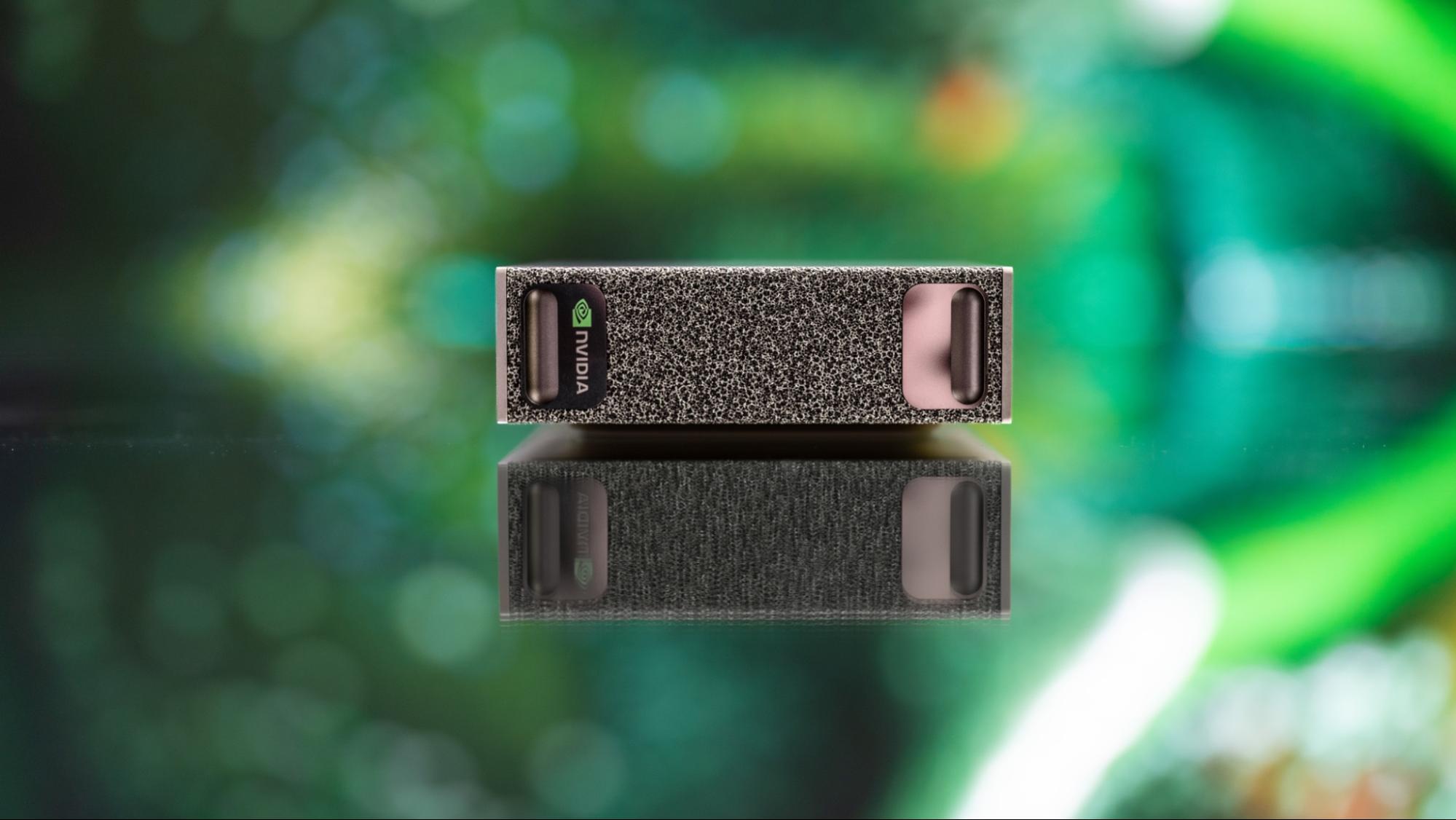
On October 13, at SpaceX’s Starbase facility, Nvidia CEO Jensen Huang personally gave the company’s latest DGX Spark AI supercomputer to Elon Musk. This was a historic occasion as the smallest supercomputer and the most potent rocket in the world met.
Huang made a joke about “delivering the smallest supercomputer next to the biggest rocket” during the delivery, which happened as SpaceX was getting ready for the successful launch of Starship Flight 11. The handoff took place just hours before the 403-foot Starship blazed into the Texas dusk sky for its 11th test flight, so the timing was no accident.
A Complete Circle In The History Of AI
In the field of artificial intelligence, the trade has significant historical relevance. Musk was associated with OpenAI when Huang delivered the first DGX-1 supercomputer to the company in 2016. The models that would later become ChatGPT were trained in part by that initial system. Nine years later, Huang produced a device with comparable processing capability in a desktop form factor weighing 1.2 kg.
“To provide AI researchers with their own supercomputer, we constructed DGX-1 in 2016.” In Nvidia’s release, Huang stated, “I hand-delivered the first system to Elon at a small startup called OpenAI — and from it came ChatGPT, kickstarting the AI revolution.” “~100X more compute per watt than the DGX-1” is what Musk himself stated on social media about the new DGX Spark.
Democratizing The Power Of AI Computing
Nvidia’s efforts to democratize high-performance AI computation outside of data centers are embodied in the DGX Spark. The company’s GB10 Grace Blackwell Superchip, which has 128GB of unified memory shared between CPU and GPU, powers the little device, which can achieve up to 1 petaflop of AI performance. It can fine-tune AI models with up to 70 billion parameters locally and do inference on models with up to 200 billion parameters.
Major tech firms like Google, Meta, and Microsoft, as well as academic institutions like NYU Global Frontier Lab, are among the early beneficiaries. Today, Nvidia’s website and partner manufacturers Dell, HP, and Lenovo will sell the gadget for $3,999.
Some industry watchers, meanwhile, are still dubious about the launch’s scope. Some have described it as a “PR stunt” rather than mass production because the first distribution may be restricted to less than two digits across all manufacturers, according to reports from SemiAccurate.