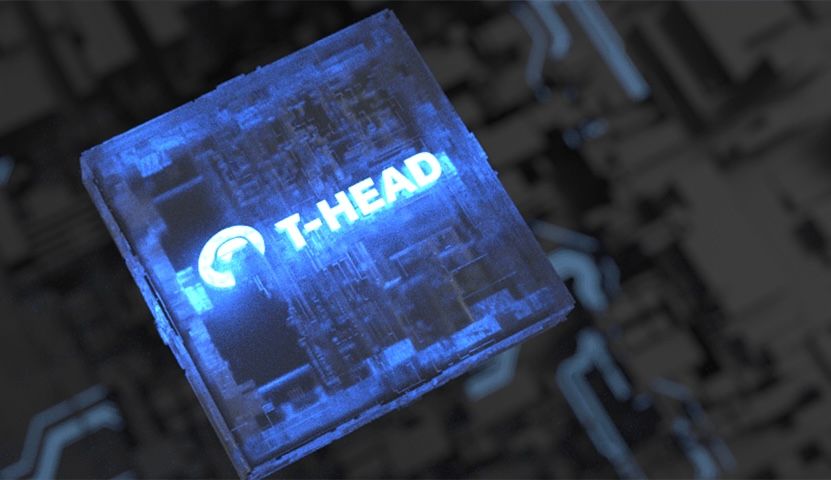
According to a Thursday Bloomberg News story, Alibaba Group Holding Ltd. is getting ready to go public with its semiconductor business, T-Head, as investor interest in Chinese AI chip startups rises.
According to those familiar with the situation, the e-commerce behemoth intends to restructure T-Head as a company that is largely owned by its employees as a first step before considering an IPO. The process is still in its early phases, and the date of a possible listing is yet unknown. Following the announcement, Alibaba’s American depositary receipts increased by more than 4.6% in pre-market U.S. trading.
Growing Interest In Homegrown Chips
Strong investor interest in a small number of companies looking to compete with Nvidia Corporation in the AI accelerator industry would be leveraged by the possible IPO. Beijing is certain that it will continue to encourage the domestic semiconductor industry as a substitute for American technology, as seen by the recent public offerings by rival Chinese chip firms.
According to the Hurun Research Institute’s 2025 rating, Cambricon Technologies, a prominent Chinese AI chipmaker, is valued at about $88 billion. In the meantime, Moore Threads Technology, sometimes referred to as “China’s Nvidia,” saw a 400% increase on its December Shanghai debut following a $1.1 billion initial public offering.
According to recent rumors, Baidu Inc. is also moving forward with plans to float its AI chip division Kunlunxin in Hong Kong, which may raise up to $2 billion.
The Expanding Impact Of T-Head
T-Head Semiconductor was established in 2018 and specializes in creating processors for Internet-of-things devices, data centers, and artificial intelligence. There are now indications of progress: Alibaba signed a deal with China Unicom, the nation’s second-biggest telecom provider, to install its Pingtouge AI accelerators in a significant data center in the Qinghai region of northwest China.
The action is in line with CEO Eddie Wu’s more general goals in artificial intelligence. Over the course of three years, Alibaba has invested more than $53 billion in AI infrastructure and development, an amount Wu has suggested the company may surpass.
In the face of persistent U.S. export restrictions on cutting-edge semiconductors, China’s drive for semiconductor self-sufficiency has intensified. DeepSeek’s R1 model, which was released in January 2025, energized China’s AI industry and gave local businesses hope that even with restricted access to foreign technology, quick advancements are still achievable.