
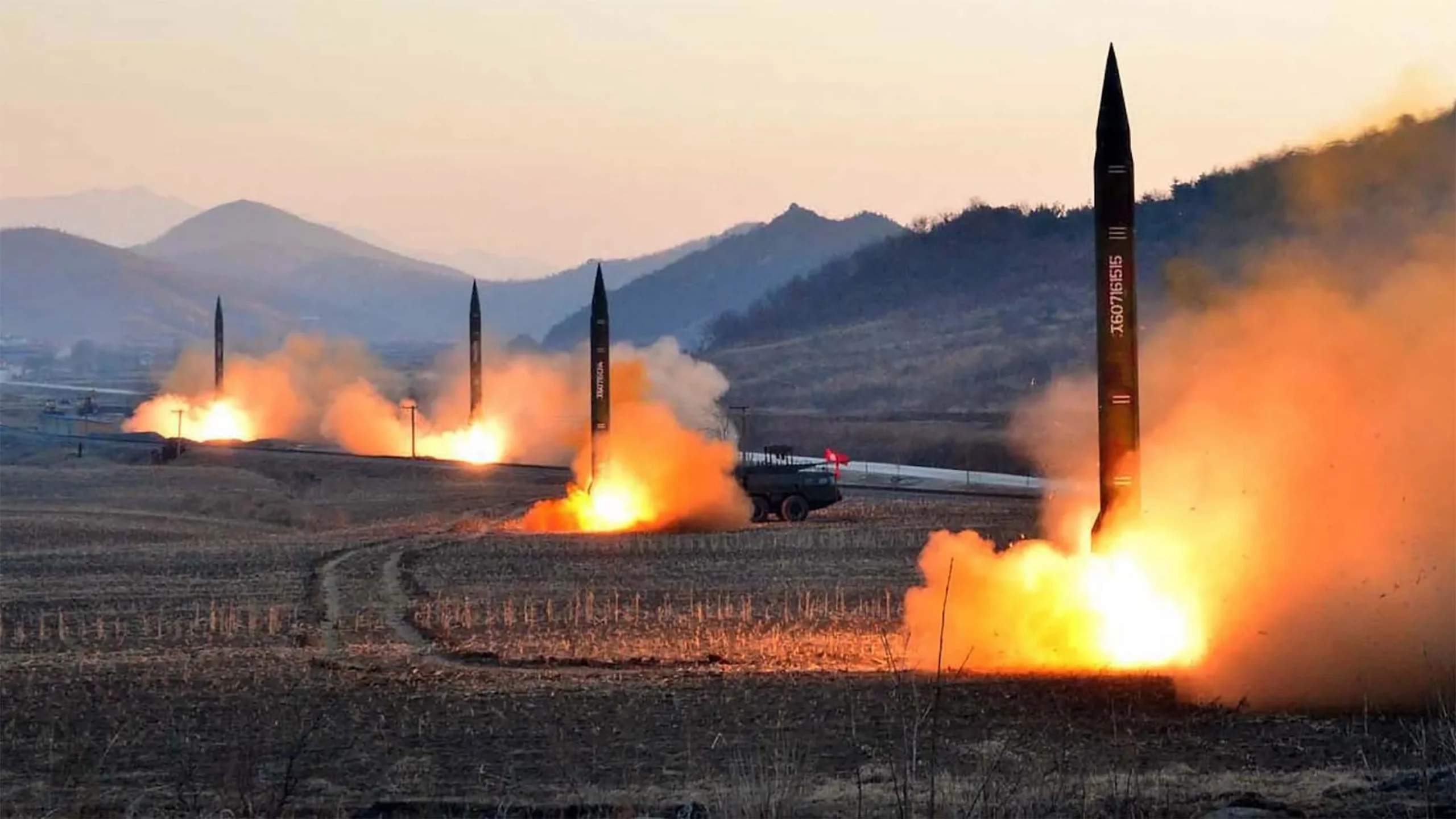
According to the annual Nuclear Weapons Ban Monitor published on March 26, the number of nuclear weapons deployed and ready for use increased once more in 2025, highlighting what arms control experts described as a dangerous trajectory at a time when the last treaty limiting the world’s two largest arsenals has expired.
At the beginning of 2026, the nine nuclear-armed nations, the United States, Russia, the United Kingdom, France, China, India, Pakistan, North Korea, and Israel, owned a total of 12,187 warheads, of which 9,745 were available for military use, an increase of 141 from the year before. Of that total, 4,012 warheads a 108 increase over 2024, were used on ballistic missiles, submarines, or at bomber bases.
A World on Alert With More Weapons. According to Hans Kristensen, director of the Federation of American Scientists’ Nuclear Information Project and a key contributor to the paper, “the ongoing yearly increase in deployed warheads is a concerning development, increasing the risks of rapid escalation, miscalculation, and accidental use.” “This makes the world more dangerous for us all.”
China, India, North Korea, Pakistan, and Russia all increased their nuclear arsenals in 2025, according to a report released by Norwegian People’s Aid in collaboration with the Federation of American Scientists. The United States has set its own expansion objectives, and France has declared ambitions to increase the number of its warheads. China’s arsenal is expanding more quickly than any other nation’s, with the Pentagon estimating that it currently has more than 600 operable warheads. By 2030, it may reach 1,000.
The Expiration Of New START Increases Uncertainty
Less than two months have passed since the New START treaty, Washington and Moscow’s final bilateral weapons limitation accord, expired on February 5, 2026. Since 2010, the pact has limited the number of deployed strategic warheads on each side to 1,550. There is no legally enforceable framework in place, even though the two nations came to an informal agreement in early February to continue adhering to the treaty’s limitations while negotiating a replacement agreement.
According to the Arms Control Association, U.S. officials have hinted at expanding the size and variety of the country’s arsenal, and a former chief U.S. negotiator warned that if restraint breaks down, Russia could quickly put more warheads on its missiles. The United States is working to modernize its nuclear triad for $1.7 trillion.
Growing Demands For Prohibition
The research pointed out a countertrend within the build-up: by the end of 2025, 99 nations had ratified or signed the Treaty on the Prohibition of Nuclear Weapons, but none of the nine nuclear-armed governments had done so. Melissa Parke, executive director of the International Campaign to Abolish Nuclear Weapons, stated, “States that claim nuclear weapons ensure their security, particularly in Europe, must understand that there is no shelter under a nuclear umbrella.”