
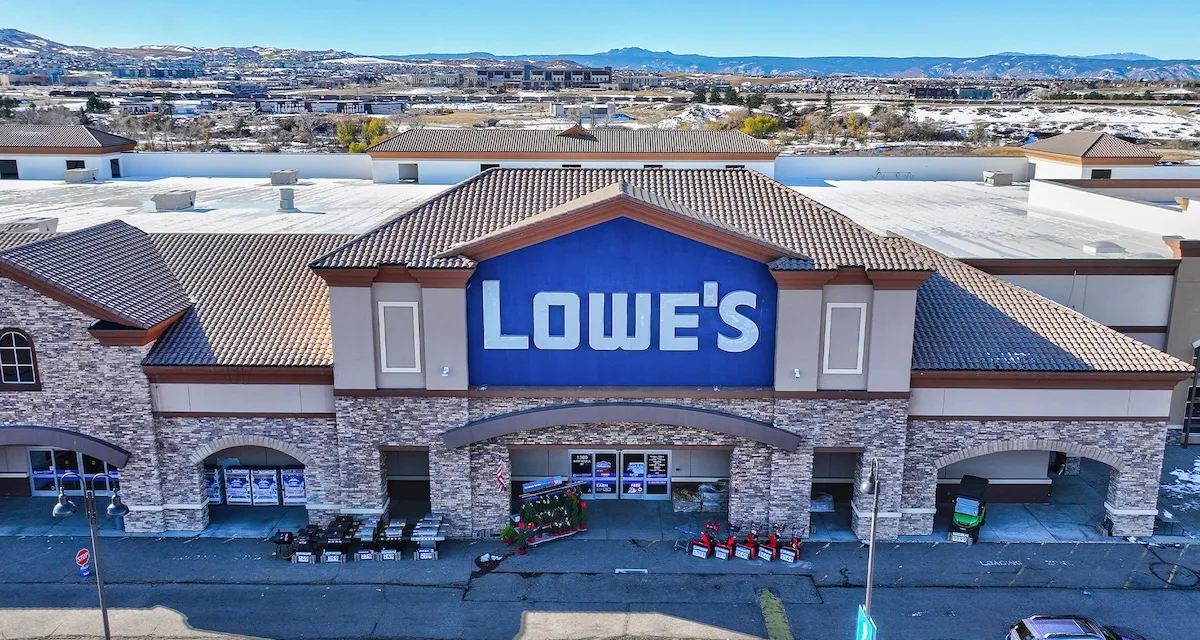
Lowe’s Companies has moved artificial intelligence beyond experimentation and into the daily operations of its retail and professional contractor businesses. As a Fortune 100 home improvement retailer, Lowe’s generated more than $86 billion in fiscal 2025 sales and employs approximately 300,000 associates across more than 1,750 stores, 540 branches, and 120 distribution centers in the United States.
The company serves roughly 16 million customers each week through its stores, digital channels, and professional contractor business. By 2026, its MyLowe’s Rewards program had grown to more than 30 million members, while professional contractors had become an increasingly important strategic growth segment.
Lowe’s has been building its AI capabilities since 2021 through partnerships with companies including OpenAI, NVIDIA, and Palantir. What began as experimentation has increasingly become part of the company’s broader operating strategy, with AI now being applied to employee productivity, customer service, product discovery, and professional contractor workflows.
Two use cases illustrate how Lowe’s is applying AI to address very different business challenges. Mylow Companion uses generative AI to close knowledge gaps among store associates, while the company’s Material Lists tool uses AI-powered document digitization and SKU matching to help contractors turn raw project information into quote-ready material lists.
Together, these applications demonstrate how AI can be embedded directly into existing workflows rather than treated simply as a standalone technology.
Closing the Knowledge Gap with Mylow Companion
Home improvement retail has an inherent knowledge challenge. Customers frequently ask highly specific questions that may fall outside an associate’s primary department or area of expertise. A customer shopping for garden supplies, for example, may ask about mulch coverage, soil requirements, or the materials needed for an unfamiliar project. An associate who does not know the answer may need to find another employee or send the customer elsewhere.
That seemingly small interaction can have meaningful consequences. Delays can result in lost sales, customers leaving for competitors, repeat trips, or product returns when customers purchase materials that are not appropriate for their projects.
The challenge becomes even more significant in an industry with high frontline employee turnover. The U.S. retail sector continues to experience higher employee separation rates than many other industries, meaning retailers must constantly train new employees and rebuild product knowledge.
For a retailer operating at Lowe’s scale, the loss of institutional knowledge is not simply a human-resources problem. It can affect customer experience, sales conversion, employee productivity, and operational consistency across thousands of locations.
Lowe’s developed Mylow Companion to address this knowledge gap. The tool gives store associates access to an AI-powered assistant that can provide product and project information when an associate encounters a question outside their expertise.
According to Chandhu Nair, Lowe’s SVP of Data, AI and Innovation, the goal is to help an associate “get to the right answers if the customer is asking a question” outside the employee’s department.
Interestingly, Mylow Companion did not originally begin as an associate-facing customer-service tool. The technology started as an internal chatbot that helped store managers analyze sales information. The idea of extending that knowledge capability to frontline associates eventually transformed the tool into a much broader application.
Mylow Companion uses the same generative AI foundation behind Lowe’s customer-facing Mylow assistant, developed in partnership with OpenAI. It combines generative AI with Lowe’s own product catalog, inventory information, and project guidance content.
Associates can interact with the system conversationally through their store devices, using either text or voice. This allows employees to ask questions in real time while working with customers instead of leaving the sales floor to find an answer.
The change in workflow is significant. Rather than paging a specialist or telling a customer that someone else needs to answer the question, an associate can query the system immediately and use the response to continue the conversation.
The technology also gives newer employees access to information that traditionally would have taken months of experience to accumulate. Instead of relying entirely on institutional knowledge passed from experienced employees to new hires, the AI assistant can provide a common knowledge layer across the workforce.
Lowe’s also incorporated feedback directly into the product-development process. Associates can provide a thumbs-up or thumbs-down response to AI answers, allowing the product team to review how the system performs in real-world situations.
That feedback revealed an important usability insight. Associates strongly preferred voice interaction over typing because looking down at a device while standing in front of a customer was inconvenient. Lowe’s used that feedback to prioritize improvements to the voice experience.
This demonstrates an important characteristic of successful enterprise AI deployments: the technology is not simply introduced and left alone. User behavior and feedback become part of the development cycle.
Mylow Companion was rolled out across Lowe’s more than 1,700 stores in May 2025, moving the system from experimentation to full-scale deployment.
The company has subsequently reported an approximately 200-basis-point improvement in its internal likelihood-to-recommend score associated with the tool. CEO Marvin Ellison has also described the effect on customer service as “dramatic,” with customer-experience metrics increasing by roughly 2% in stores where associates actively use the technology.
Lowe’s has not publicly released a specific measurement showing how much Mylow Companion has reduced new-hire ramp time. However, faster onboarding and improved access to knowledge remain important parts of the strategic rationale behind the technology.
The larger lesson is that generative AI does not always need to replace a worker to create value. In this case, the technology functions as a real-time knowledge layer that helps employees make better use of their existing skills while reducing the disadvantages associated with limited experience.
Speeding Up Pro Estimates with Automated Document Digitization
Lowe’s is applying AI to another major source of friction in its business: the professional contractor estimating process.
Contractors frequently begin projects with information captured in highly unstructured formats. Jobsite notes may be handwritten, materials may be recorded in spreadsheets, and project information may be stored in photographs or other documents.
Turning that raw information into an organized and priced material list can take significant time. Contractors must interpret their notes, identify the appropriate products, enter quantities, match items to SKUs, and prepare a quote that can be presented to the customer.
The speed of this process matters because estimating sits directly between a contractor’s project walkthrough and the customer’s purchasing decision. A slow quote can create an opportunity for a competing supplier to respond first.
For Lowe’s, the importance of this workflow is amplified by the growing strategic value of its Pro business. Professional contractors represent a significant portion of Lowe’s customer base and have become an increasingly important growth priority for the company.
Lowe’s has been expanding its capabilities in this market through acquisitions and technology investments, including its 2025 acquisition of Foundation Building Materials. The company is targeting a large U.S. professional building market, making contractor productivity and customer retention important components of its broader growth strategy.
In May 2026, Lowe’s introduced Material Lists, an AI-powered tool designed to remove some of the manual work involved in creating contractor estimates.
The system uses automated document digitization and SKU matching to interpret unstructured information and transform it into an organized, priced product list. It can process handwritten notes, photographs, spreadsheets, and other supported file formats.
The tool also supports both English and Spanish inputs, helping Lowe’s address the needs of a diverse professional contractor customer base.
For contractors, this changes the estimating workflow substantially. Instead of manually retyping a handwritten jobsite list or transferring information from a photograph into an ordering system, the technology can interpret the source material and create a structured list.
The result is a process designed to move from raw project information to a usable quote in minutes rather than requiring extensive manual data entry.
Reducing manual entry also has the potential to reduce mistakes. Errors in product identification, quantities, or pricing can create complications later in a project, potentially resulting in missing materials, pricing disputes, or costly changes.
Material Lists is part of a broader set of AI tools Lowe’s is developing for professional customers. The company also offers capabilities such as Blueprint Takeoffs, which can generate material lists and estimates from project plans, and Pro Extended Aisle, which expands product availability beyond what is physically stocked on a store’s shelves.
These technologies suggest that Lowe’s is not approaching AI as a collection of unrelated features. Instead, the company appears to be building a connected technology layer around the entire Pro contractor journey, from project planning and estimating to product selection and purchasing.
The Material Lists application is still relatively new compared with Mylow Companion, having launched in May 2026. Lowe’s has indicated that the tool is expected to help improve close rates on larger orders, but the company has not yet published specific figures showing its impact on quote turnaround time, order volume, or conversion rates.
That lack of performance data is understandable given the technology’s recent launch. As adoption increases, future reporting may provide a clearer picture of whether faster AI-assisted estimates translate into measurable revenue gains for Lowe’s and its Pro customers.
AI as a Workflow Layer
The two Lowe’s use cases demonstrate two different ways an enterprise can deploy AI.
Mylow Companion addresses a knowledge problem. It gives frontline employees immediate access to information that would traditionally depend on experience, training, or the availability of another specialist.
Material Lists addresses a process problem. It takes information that is difficult for conventional software to interpret and converts it into structured data that can be used for quoting and ordering.
Despite their differences, both applications share an important characteristic: they are embedded directly into existing workflows.
Lowe’s is not asking employees or contractors to completely change how they work to use AI. Instead, the technology is being positioned at points where employees already experience friction.
For store associates, that friction occurs when they encounter a question they cannot answer. For contractors, it occurs when raw project information must be transformed into a formal material list and quote.
This approach can make enterprise AI adoption more practical. Rather than introducing AI simply because the technology is available, companies can focus on specific operational problems where automation or intelligent assistance can produce measurable improvements.
Lowe’s experience also highlights the importance of feedback and iteration. Mylow Companion’s voice functionality became a higher priority after associates demonstrated through feedback that typing was inconvenient during customer interactions. That kind of adjustment ensures that AI is designed around real working conditions rather than assumptions made in a technology lab.
The Broader Impact on Retail
Lowe’s AI strategy reflects a larger shift taking place across retail. As retailers manage enormous product catalogs, complex supply chains, high employee turnover, and increasingly demanding customers, AI can serve as an intelligence layer connecting information with employees and customers at the moment it is needed.
For frontline employees, generative AI can reduce the gap between what an experienced worker knows and what a new employee can accomplish. For customers, that can translate into faster answers and more consistent service.
For professional contractors, AI can reduce administrative work and allow more time to be spent on project execution and customer relationships.
The potential value extends beyond efficiency. When AI is connected to product catalogs, inventory systems, project information, and customer workflows, it can become part of the infrastructure through which decisions are made and transactions are completed.
That makes implementation quality particularly important. The value of these systems depends not only on the underlying AI model but also on the quality of the data, integration with existing systems, user experience, feedback mechanisms, and ability to measure outcomes.
Conclusion
Lowe’s demonstrates how large retailers can move AI from experimentation into practical, large-scale business operations.
Mylow Companion uses generative AI to give store associates immediate access to product and project knowledge, helping employees answer customer questions more effectively and creating a more consistent experience across stores.
Material Lists applies AI to a different challenge by converting handwritten notes, photographs, spreadsheets, and other unstructured project information into organized, quote-ready material lists for professional contractors.
Together, these applications show that the most valuable enterprise AI deployments may not be the ones that attempt to automate entire jobs. Instead, they may be the systems that remove specific points of friction from existing workflows, helping employees and customers accomplish important tasks faster and with greater confidence.
For Lowe’s, AI is increasingly becoming more than a technology initiative. It is evolving into an operational layer that supports employees, improves customer interactions, and strengthens the company’s position in the growing professional contractor market.