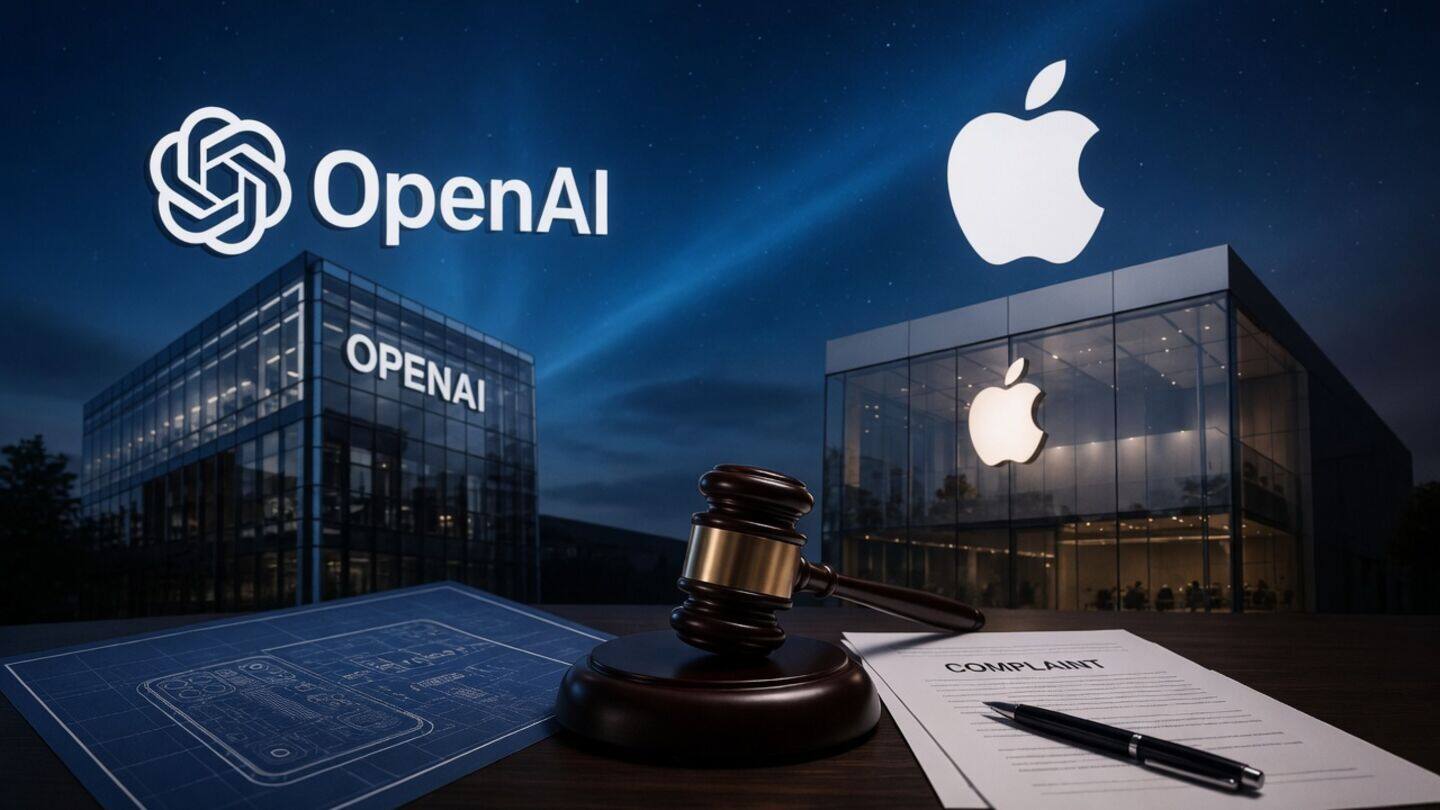
Numerous outrageous accusations in Apple’s trade secret lawsuit against OpenAI portray a picture of a concerted attempt to obtain private information from both present and past Apple employees. The most startling thing, though, is how nonchalantly the alleged wrongdoing is portrayed; one communication says, “LOL, I found out I can access the [network storage], so funny.”
These and other unusually detailed charges are included in the 41-page complaint that was filed on Friday. These are a few that caught our attention the most:
- “Normalized and exemplified by leadership.” By describing OpenAI in this way, Apple is demonstrating that its complaint is not limited to rogue personnel but rather that wrongdoing of this kind is ingrained in OpenAI’s culture and is directed from the top down.
- “Rotten to the core.” It’s up to Apple to use the comparison of rotting fruit to criticize OpenAI’s actions in this instance. According to rumors, the AI model builder is developing a hardware product to rival the iPhone, possibly a smartphone of its own. However, Apple wants to emphasize that OpenAI’s work was purportedly created using Apple trade secrets. According to the complaint, “OpenAI’s fledgling hardware business now rests on the shakiest of foundations, rotten to its core by its illegal reliance on misappropriated trade secrets.”
- “This is just the beginning.” Apart from recording the accusations made against its former employees, Apple is implying that the misbehavior described in the lawsuit is but a small portion of what it will find once the discovery process begins. Corporate communications and documents, including emails and texts, are retrieved during discovery, which may reveal other instances of this type of activity at OpenAI. According to Apple’s complaint, “discovery will expose that the misappropriation has been occurring on a scale many times greater than the several instances described below.”
- “It’s hilarious that I discovered I can access the [network storage].” Apple claims that Yu-Ting “Alyssa” Peng, an Apple employee who was purportedly a liaison between Apple and OpenAI, received this message from Chang Liu, a former senior systems electrical engineer at Apple before joining OpenAI. Peng is not a defendant in the lawsuit, but she later departed to work at OpenAI. Peng allegedly said, “I’m ready,” in response to the message. According to Apple, Liu exploited an authentication flaw on Peng’s Apple-provided work computer to gain access to Apple’s systems.
- “I have another computer.” Within hours of leaving Apple, Liu is said to have texted this as well, mentioning another Apple machine that he intended to use to gain access to Apple’s private data. On Peng’s work laptop provided by Apple, Apple found the message.
- “I had no idea that we could take those from the office.” One of the more outrageous claims is that OpenAI chief hardware officer Tang Yew Tan, who worked at Apple for 24 years, most recently as vice president of product design for the iPhone and Apple Watch, instructed job candidates to bring “actual parts” from Apple to their interviews at OpenAI for “show and tell sessions.” According to Apple, one candidate expressed surprise at the request, claiming he was unaware that Apple parts might be removed from the office. Additionally, Apple claims that workers were told to bring “prototypes” and “CAD/design artifacts” to interviews.
- Steer clear of the “dreaded walkout.” Apple claims that, to reduce the likelihood that its alleged trade secret theft would be discovered, OpenAI trained departing Apple employees to circumvent Apple’s security protocols. According to the complaint, OpenAI gave new hires access to an internal Apple document marked “Need to know” that contained information on how to avoid the “dreaded walkout,” which would have resulted in their immediate termination from Apple after giving notice, rather than allowing them to continue working for the customary two weeks, which would have given them more time to access Apple’s private information.
- When leaving Apple, “let OpenAI know ‘asap’ if you are asked to sign anything.” The complaint claims that if Apple asks departing employees to sign anything during an exit interview, they should notify OpenAI right away, urge them not to sign, and assist OpenAI job hopefuls in avoiding Apple’s security protocols.
- “More than 400 former Apple employees are currently employed at OpenAI.” One more surprise: The extent to which Apple staff have departed the iPhone manufacturer to work for OpenAI is revealed in the complaint. Apple uses this number to illustrate the possible scope of the issue, stating that “it is not surprising that certain OpenAI personnel have knowledge of Apple’s confidential and proprietary information, which they are obligated to keep confidential.” However, Apple’s exclusive industrial design methodologies, procedures, and metal-finishing know-how were accessed, exploited, and used by OpenAI. Last year, OpenAI paid $6.5 billion to acquire the business io, which was founded by former Apple employees, including Jony Ive. I am now a defendant in this action because Apple claims that the company misled Apple’s partner into thinking it had authority to perform a “confidential metal-finishing technique” using its industrial design techniques. Additionally, Apple claims that OpenAI asked specific questions that “only Apple-insiders would know to ask” of a supplier utilizing its exclusive information on design and components linked to power and batteries, even using “internal terminology.”
- “Apple has no other option.” Despite using relatively standard legal language, it seems that Apple may have attempted to settle the dispute out of court in this instance. The IT behemoth claims that it first attempted to get in touch with OpenAI in February to voice its concerns, but OpenAI never got back to it.
OpenAI’s only public reply so far is a statement posted on X on Friday that says, “We have no interest in other companies’ trade secrets.” Our goal is still to develop cutting-edge technology that empowers people everywhere.