
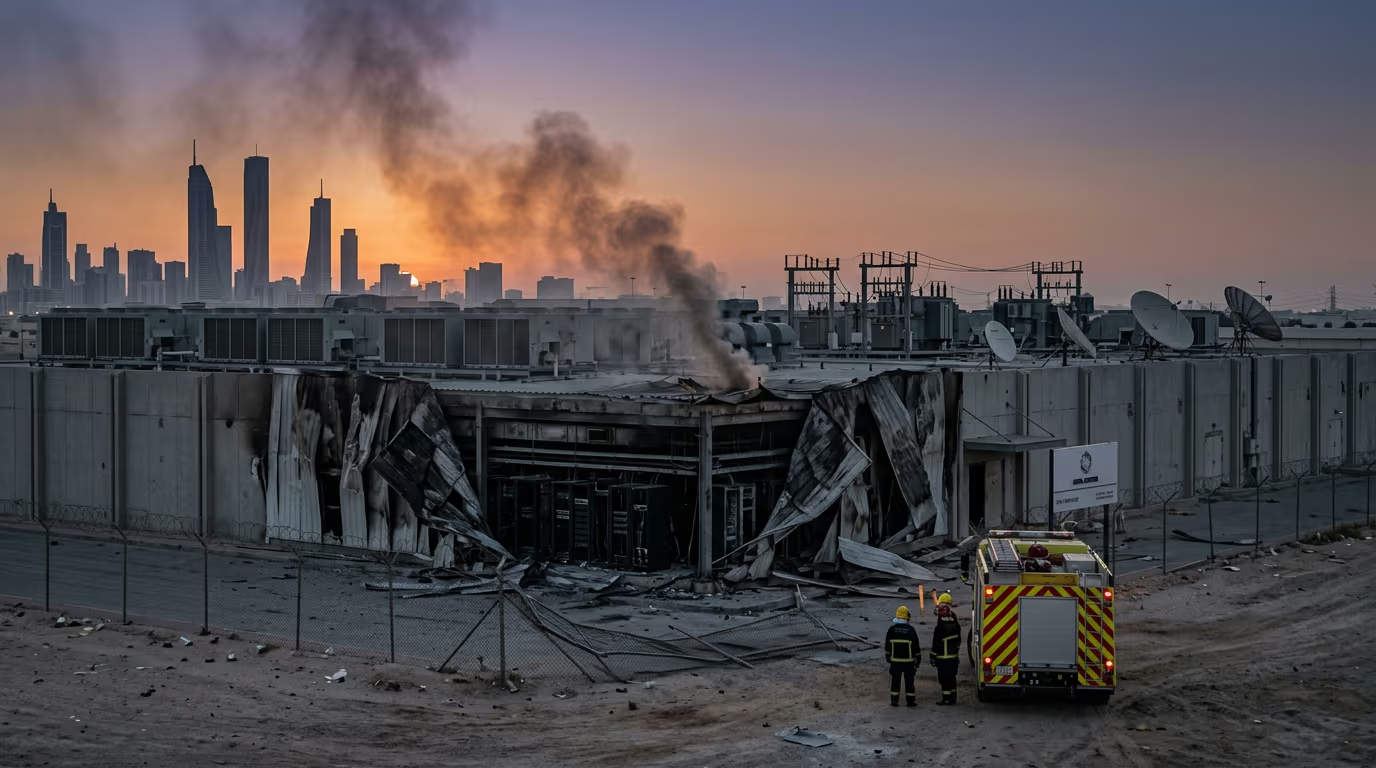
Drone activity has “been disrupted” in Amazon’s cloud computing region in Bahrain, the company announced on Monday. This is the second time the facility has been affected since the U.S.-Israeli war on Iran began earlier this month.
An Amazon representative confirmed that drone activity in the region was the cause of the outage, which was initially reported by Reuters. Although the business did not reveal the extent of the damage or provide a restoration schedule, Amazon stated that it is assisting customers in migrating to other AWS regions as it works to recover. Amazon stated in a statement on Monday night, “As this situation develops and, as we have previously advised, we request those with workloads in the affected regions continue to migrate to other locations.”
A Trend Of Cloud Infrastructure Attacks
The most recent outage comes after a more extensive attack on March 1, when three AWS data centers in the Middle East—two in the United Arab Emirates and one in Bahrain—were destroyed by Iranian drone strikes. According to AWS updates uploaded to its health dashboard, those attacks resulted in water damage from fire suppression systems, power delivery disruptions, structural damage, and fires.
Core services like EC2, S3, DynamoDB, Lambda, and RDS were hampered by the initial attacks, which took out two of the three availability zones in the UAE area (ME-CENTRAL-1) and one zone in Bahrain (ME-SOUTH-1). The disruptions spread to consumer-facing services throughout the Gulf, impacting major banks like Emirates NBD, First Abu Dhabi Bank, and Abu Dhabi Commercial Bank, as well as ride-hailing service Careem and payment companies Hubpay and Alaan.
According to Tom’s Hardware, Iran’s Islamic Revolutionary Guard Corps said it had specifically targeted the Bahraini facility because AWS houses U.S. military workloads there; AWS declined to comment.
Cloud Safety In A Conflict Area
The frequent attacks have prompted concerns about how susceptible hyperscale cloud infrastructure is to hostilities. The March 1 incident was the first known military assault on a hyperscale cloud service, according to the Uptime Institute. Data centers and related energy infrastructure might be targets in the “compute era,” similar to how oil infrastructure has been in previous conflicts, the Center for Strategic and International Studies warned.
AWS has repeatedly advised users to move their workloads to areas in the US, Europe, or Asia Pacific and to activate disaster recovery plans. Big Tech investment intentions in the Middle East remain uncertain due to the current battle, which President Donald Trump has stated might last “four to five weeks” or longer.