
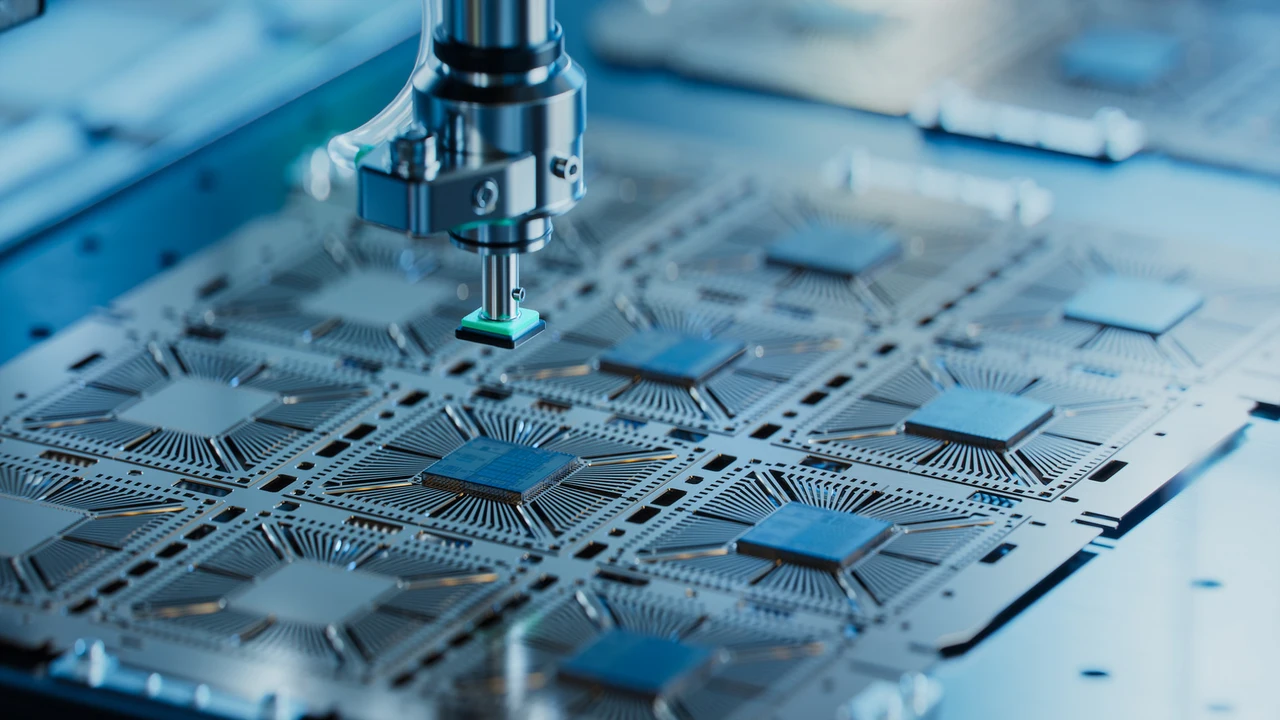
The Information revealed that a Shanghai-based, state-backed company has started limited mass production of domestic immersion deep ultraviolet lithography machines, a first for China that jeopardizes the Dutch company’s continued access to its biggest emerging market. This news caused ASML shares to plummet on Monday.
U.S. chip equipment manufacturers Applied Materials, Lam Research, and KLA Corp. fell in sympathy as the stock erased early gains of more than 2% and fell as much as 6.6%.
What China Constructed
A state-backed business based in Shanghai has reportedly begun manufacturing immersion DUV scanners for 28-nanometer devices in a single exposure, with multi-patterning potentially expanding capacity to 7nm. To attain the milestone, the company brought together development teams from several Chinese companies.
Production is still small, with deliveries scheduled for SMIC, Hua Hong Semiconductor, and ChangXin Memory Technologies. About five units are anticipated this year, increasing to about 20 in 2027. Since September 2025, SMIC has been testing the device.
The Significance of It for ASML
China is ASML’s most commercially sensitive geopolitical risk, accounting for up to 20% of the company’s 2026 sales, according to Reuters. ASML’s main business in China is DUV tools since export regulations already prevent it from selling its more sophisticated extreme ultraviolet systems there.
According to Reuters, ASML’s technological advantages remain intact for the time being because the Chinese system still trails behind in terms of performance and dependability and needs further testing before wider adoption. Although it is still in the prototype stage, China is also working on a homegrown EUV machine.
Greater Context
The announcement coincides with the United States’ growing efforts to limit China’s access to cutting-edge chipmaking machinery. The MATCH Act, which would specifically prohibit the sale and servicing of all DUV immersion lithography systems to Chinese chipmakers like SMIC, Hua Hong, and CXMT, was sponsored by bipartisan U.S. senators in April. Regardless of domestic Chinese development, if such a law is passed, ASML’s China DUV business would be eliminated; therefore, Monday’s news suggests that Beijing may be getting ready for that possibility.