
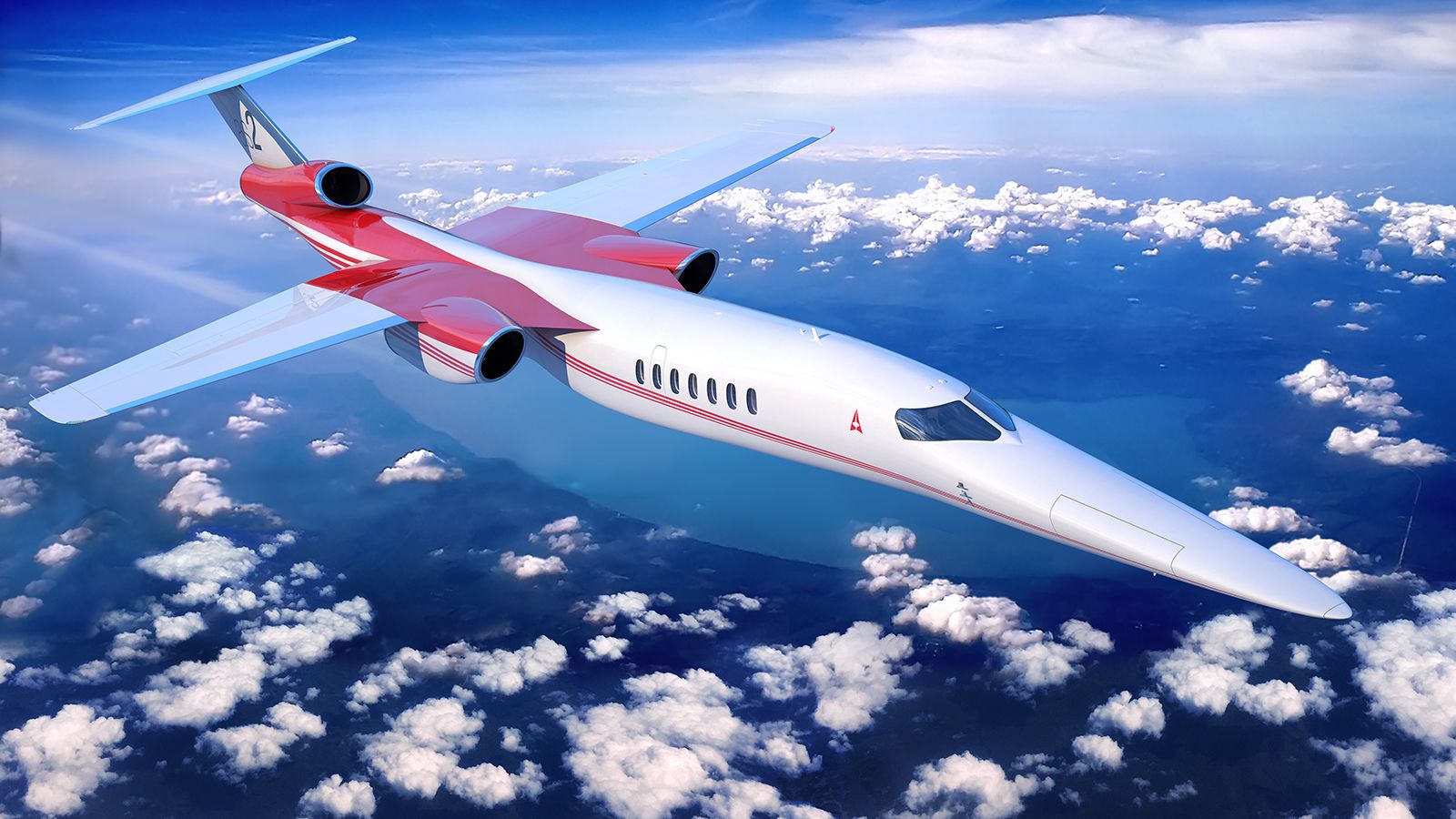
A significant step toward the development of the Overture airliner and the resuscitation of supersonic commercial travel was taken on January 28, 2025, when Boom Supersonic’s prototype aircraft, the XB-1, broke the sound barrier during a test flight at the Mojave Air and Space Port in California.
XB-1 Dismantles The Sound Barrier
On January 28, 2025, Boom Supersonic’s prototype aircraft, the XB-1, accomplished supersonic flight, making aviation history. Chief Test Pilot Tristan “Geppetto” Brandenburg was at the controls of the test flight, which was conducted at the Mojave Air and Space Port in California. During its 33-minute flight, the aircraft made three supersonic runs, reaching a speed of Mach 1.1 at 34,000 feet.
This historic accomplishment opens the door for supersonic commercial flying by being the first privately built civilian aircraft to break the sound barrier. Since its first flight in March 2024, the XB-1, sometimes referred to as the “Baby Boom,” has been put through a rigorous testing process as a one-third scale demonstrator for Boom’s future Overture airliner.
Details Of The Supersonic Test Flight
Boom Supersonic’s XB-1’s historic supersonic flight on January 28, 2025, was painstakingly prepared and carried out. With Chief Test Pilot Tristan “Geppetto” Brandenburg at the controls, the plane departed the Mojave Air and Space Port in California at 8:22 a.m. local time. The XB-1 completed three supersonic runs during its 33-minute flight, reaching a maximum speed of Mach 1.1 at 34,000 feet. Years of research and testing, including earlier flights that achieved Mach 0.69 speeds, culminated in this historic flight.
The following are important specifics of the supersonic test flight:
This test was conducted on the XB-1, a one-third scale demonstrator for the planned Overture airliner.
To reduce the impact of sonic booms on populated regions, the flight path was carefully selected.
Ground control received real-time data for ongoing observation and analysis.
The test’s accomplishment paves the path for the advancement of commercial supersonic aircraft.
Since the Concorde’s retirement, this accomplishment represents the first time a privately built civilian aircraft has broken the sound barrier.
Supersonic Travel Returns
Boom Supersonic’s XB-1’s successful supersonic flight is a major step toward the resurgence of supersonic commercial travel, which hasn’t happened since the Concorde’s retirement in 2003. Boom Supersonic plans to launch its Overture airplane before the end of the decade, demonstrating how this accomplishment has rekindled interest in high-speed air travel. Beyond speed, the company’s vision emphasizes efficiency and sustainability. With its 100% sustainable aviation fuel design, Overture may lessen the environmental effect of supersonic travel.
The following are significant advancements in the revival of supersonic travel:
The Overture Superfactory was completed by Boom Supersonic, indicating advancements in production capacity.
Developments in the Symphony engine project, which will be essential in supplying the energy for the upcoming generation of supersonic aircraft.
With 130 aircraft orders from major carriers like American carriers, Japan Airlines, and United Airlines, industry support is growing.
Potential to cut long-haul flight times in half, such the 3.5-hour journey from London to New York.
These developments raise the possibility that the long-haul dream of supersonic commercial flight will soon come true, transforming long-haul aviation travel for people all over the world.
Boom’s Overture Vision
With an emphasis on speed, sustainability, and passenger experience, Boom Supersonic’s concept for the Overture airliner goes beyond simply shattering the sound barrier. Significant developments in the Overture project have been revealed by the business, including the completion of the Overture Superfactory and the creation of the Symphony engine. Overture, which is built to fly at Mach 1.7 over water, is expected to use only sustainable aviation fuel and cut long-haul flying times in half.
Among the Overture airliner’s prominent features are:
A state-of-the-art flight deck including ergonomic design and cutting-edge avionics for improved pilot performance.
65–80 passenger capacity that strikes a balance between efficiency and speed.
130 aircraft have been ordered by major airlines, with an anticipated entry into service by the end of the decade.
Dedication to achieving net-zero carbon emissions in line with the environmental objectives of the aviation sector.
The Overture project is a major advancement in aviation technology that promises to revolutionize long-distance air travel for the twenty-first century, as Boom Supersonic works to bring supersonic travel to reality.