
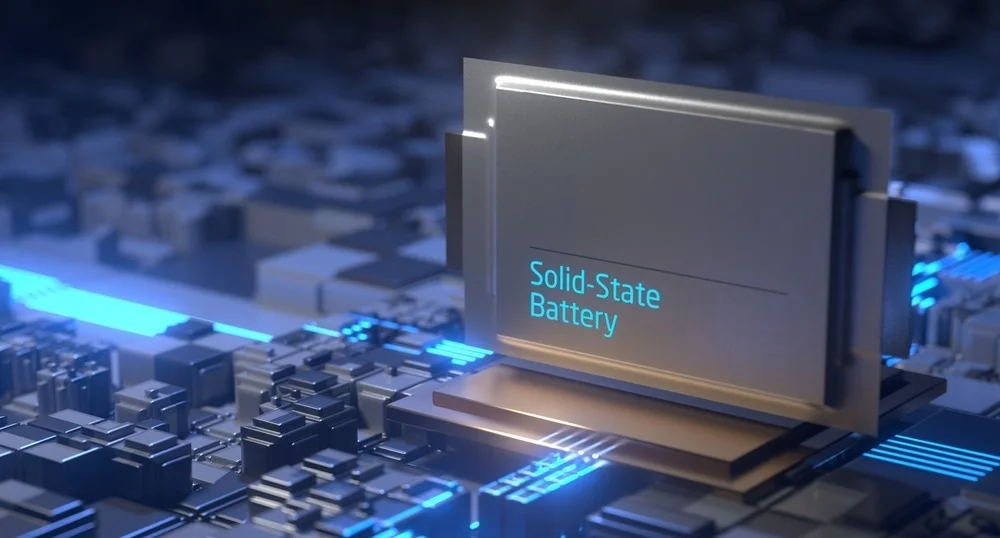
A number of businesses are making significant strides toward the commercialization of solid-state battery technology, which might lead to a breakthrough in safer and more effective energy storage for both industrial and consumer applications.
Hardware firm BMX started a crowdsourcing campaign for its SolidSafe line of power banks, which use solid-state battery technology to do away with the risk of fire that comes with traditional lithium-ion batteries. The power banks are incredibly durable; even after corners are hacked off or nails are driven into them, they still charge. BMX’s SolidSafe series has 5,000mAh and 10,000mAh devices with 15W wireless charging and 30W wired output, according to 9to5Mac. The gadgets have aluminum construction, color LCD screens, and MagSafe compatibility.
Copper Integration Is Made Possible By Patent Breakthrough
This week, Hyundai Motor Company submitted a major U.S. patent application for a method that makes copper work in solid-state batteries based on sulfide. Because sulfides corrode copper, manufacturers have to steer clear of the highly conductive material, requiring the use of more costly materials like nickel or stainless steel in typical solid-state batteries, according to Electrive. Copper is protected from corrosion by Hyundai’s invention, a protective carbon-based coating containing lithiophilic metal particles that preserves copper’s outstanding conductivity and cost-effectiveness.
A copper current collector, protective coating, anode, sulfide electrolyte, cathode, and terminal collector are all part of the multi-layered architecture described in the patent. This innovation could solve one of the main obstacles to the commercial adoption of solid-state batteries by drastically lowering production costs while enhancing battery performance.
Growth In Commercial Availability
Renogy, a world leader in lithium power and off-grid solar systems, increased the number of its Lithium 2.0 solid-state battery series available in the US and Europe. The 104Ah, 120Ah, and 240Ah versions from the company use EV-grade solid-state LiFePO4 cell technology, which has a wide temperature range and over 6,000 cycles. These batteries are covered by seven to eight-year warranties and offer IP67-level environmental protection.
The momentum of the industry is not limited to specific businesses. Solid-state battery production timelines have been agreed to by major manufacturers such as Toyota, Samsung SDI, and Honda; Samsung SDI plans to begin mass production by 2027. In January 2025, Honda started test production after launching a demonstration production line at their research and development plant in Japan.
“There is a growing population investing in off-grid energy innovation, with strong sustainability goals and a high-performance culture,” stated Dr. Yi Li, the CEO and creator of Renogy. Solid-state batteries may make up as much as 40% of all EV batteries made globally by 2030, according to industry forecasts, which are in line with the global trend toward sustainable energy storage.