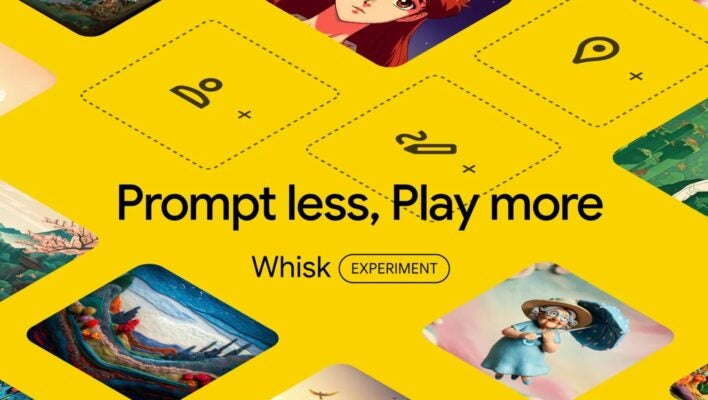
By enabling users to generate graphics using pre-existing photos as cues, Google’s new AI tool Whisk presents a novel approach to image generation and provides a more user-friendly substitute for conventional text-based techniques. According to PetaPixel, this experimental tool, which is accessible through Google Labs in the US, transforms the creative process for quick visual exploration and concept visualization by allowing users to establish subjects, scenarios, and styles by simply dragging and dropping various photos.
How Images Are Generated By Whisk?
Google’s sophisticated Imagen 3 picture generating model, which was revealed concurrently with the tool’s introduction, is used by Whisk to create images. Users upload one or more photographs as visual cues, with the opportunity to include written descriptions, to start the process. After analyzing these inputs, Whisk generates a synthesized prompt that directs the image generating process by identifying the intended subjects, situations, and styles.
Whisk’s image-to-image method captures the essence of input images instead of creating exact reproductions, allowing for more subtle and intuitive creation than typical text-to-image models. Depending on the visual and linguistic inputs, the application creates several variations and shows users a variety of AI-generated images with text prompts for each one. By modifying the underlying instructions or trying out various input image combinations, users can then improve their outcomes, encouraging an inquisitive and iterative creative process.
Important Characteristics Of Whisk
With the use of optional text prompts or image uploads, users can specify important components like subjects, sceneries, and styles using Whisk’s distinctive combination of textual and visual input methods. To accommodate users without source photos, the tool’s UI features a handy dice icon for creating random image suggestions. After photos are created, users may examine and edit the AI-generated text descriptions and like or download their creations. Without depending only on in-depth written descriptions, this novel method allows artists and creative professionals to rapidly explore ideas and visualize concepts.
The Whisk Tool’s Limitations
Although Whisk provides cutting-edge image creation features, users should be aware of the following limitations:
Results that are unpredictable: Google admits that generated images can not always match user expectations. For example, a person’s height, hairdo, or skin tone may be changed in a photo.
Experimental nature: Whisk is not intended for exact pixel-level adjustments, but rather for exploration as a Google Labs experiment. Because of this, it might not be appropriate for activities that call for precise image reproduction or intricate modifications.
Restricted availability: At the moment, Whisk is only available to US users via Google Labs.
Possibility of bias: Similar to many AI models, Whisk might pick up biases from its training set, which could have an impact on the representation and diversity of the images it produces.
Notwithstanding these drawbacks, Whisk is nevertheless a potent tool for visual exploration and creative ideas, providing users with a distinctive method of image generation through visual cues.
Uses For Whisk AI
The novel image-to-image methodology of Whisk AI creates fascinating opportunities for both fans and creative pros. Designers and artists can use Whisk to quickly develop graphic concepts, experiment with different styles, or come up with ideas for new projects. The tool is especially helpful for creating mood boards and visual brainstorming sessions because it can mix various photos.
Whisk provides a distinct edge in the fields of content production and digital marketing. The application allows marketers to swiftly create images for social media campaigns, transforming pre-existing brand imagery into new, visually appealing material. Furthermore, Whisk’s user-friendly interface democratizes the process of producing visually appealing graphics for a range of uses, from small business promotions to personal projects, by making it accessible to non-designers.