
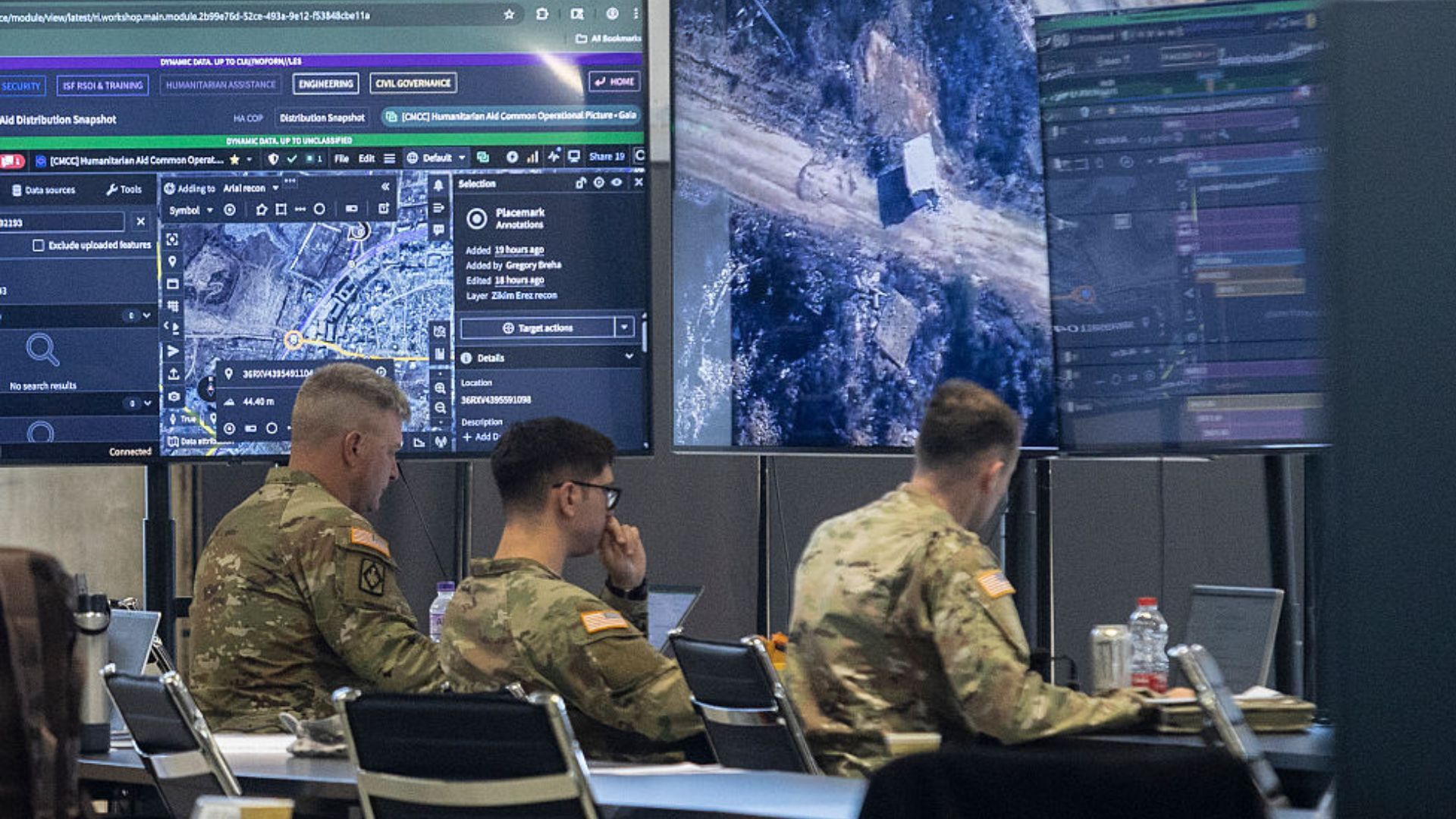
According to The Washington Post and The Wall Street Journal, the U.S. military used the most sophisticated artificial intelligence system ever used in American combat operations to strike about 1,000 targets in the first 24 hours of its campaign against Iran starting on February 28. Palantir’s Maven Smart System, driven by Anthropic’s Claude AI model, analyzed surveillance feeds, satellite photos, and classified intelligence to produce target recommendations, offer accurate coordinates, and rank strikes almost instantly. In only a few hours, about 20 workers completed tasks that previously needed weeks of planning and a team of 2,000 intelligence analysts thanks to the system.
AI In The Heart Of The Kill Chain
The role of the Maven system has come under close examination as the campaign enters its third week and U.S. Central Command reports that more than 6,000 targets have been hit. During the strikes, Claude was employed for intelligence evaluations, target identification, and battle scenario simulation, according to the Wall Street Journal’s initial story. In the run-up to the strike, Maven suggested hundreds of possible targets, ranked them by operational significance, and supplied precise geographic locations, according to The Washington Post, which cited three officials familiar with the program.
The deployment occurred just hours after President Trump declared Anthropic a “supply chain risk” and ordered all federal agencies to cease utilizing the company’s technology due to its refusal to remove restrictions that prevented Claude’s use in fully autonomous weaponry and widespread domestic monitoring. The Pentagon persisted in utilizing the system in defiance of the embargo, with officials admitting they had grown too reliant on it to stop access in the middle of a fight. Since then, Anthropic has accused the Trump administration of illegal retaliation in two federal lawsuits.
AI Targeting Is Examined After A School Strike
The controversy surrounding AI-assisted targeting has intensified since the war’s bloodiest civilian event. According to a preliminary Pentagon study, the United States was probably behind a Tomahawk cruise missile strike that killed over 165 individuals, mostly schoolgirls between the ages of 7 and 12, at the Shajareh Tayyebeh girls’ primary school in Minab, southern Iran. A Tomahawk struck a nearby Islamic Revolutionary Guard Corps naval facility in video that was verified by The New York Times and geolocated by Bellingcat. Smoke was already billowing from the area close to the school.
According to a person familiar with the preliminary results reported by the Associated Press, U.S. Central Command relied on target coordinates based on out-of-date data provided by the Defense Intelligence Agency. The school building was formerly a part of the military installation until about 2017, when a wall was constructed to divide the two and a watchtower was taken down, according to public satellite imagery. Later, vibrant murals were painted on the school’s walls that could be seen from space, and the structure was prominently marked on internet maps.
In a letter to Defense Secretary Pete Hegseth, more than 45 Democratic senators expressed concerns about cuts to a Pentagon office established by Congress to lessen civilian casualties and demanded explanations. According to a former Pentagon officer who spoke to the Associated Press, the Trump administration’s reforms prioritized combat effectiveness over civilian harm prevention. The inquiry is still under progress.