
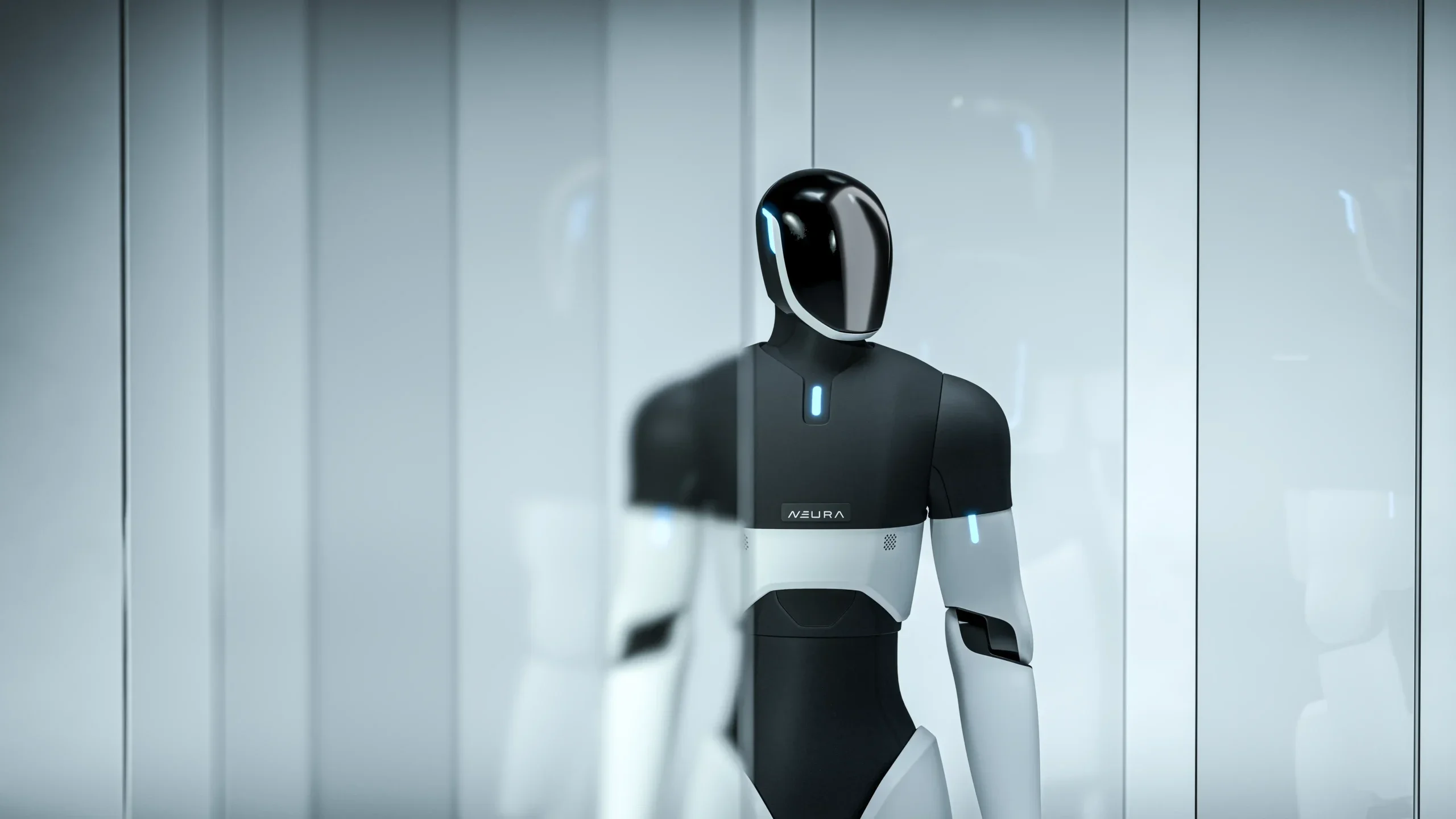
In order to develop the next generation of robots and physical AI, German robotics firm Neura Robotics has partnered with semiconductor giant Qualcomm. The agreement is the most recent partnership between robotics startups and more established tech hardware and software firms in the developing physical AI sector.
The firms will collaborate to develop the “brain and nervous system” of robots to enhance the deployment of humanoid and general-purpose robots in real-world settings, both household and industrial, even if no specific products were named in the announcements on Monday.
More precisely, Neura will base its robot designs on Qualcomm’s Dragonwing Robotics IQ10 CPUs. The IQ10 series of processors, unveiled at CES earlier this year, is designed for use with humanoids and autonomous mobile robots (AMRs).
Additionally, Neura intends to test and improve the robots using Qualcomm’s IQ10 processors using its Neuraverse robotic simulation and training platform, which was introduced in June 2025.
In a news statement, David Reger, CEO and founder of Neura Robotics, stated, “This collaboration marks a major step toward making physical AI real: open, scalable, and trusted.” “We aim to accelerate a future where cognitive robots operate safely alongside humans across industries and throughout everyday life by combining Qualcomm Technologies’ leadership in edge AI and connectivity with our cognitive robotics platforms and the Neuraverse ecosystem.”
Both parties benefit greatly from this agreement. And it’s a formula that will certainly become a common tactic for robotics businesses wanting to move their goods into the real world. For example, in January, Boston Dynamics announced a strategic alliance with Google DeepMind to use Google’s AI fundamental models to expedite the development of the robotic company’s Atlas humanoid robot.
The same conclusion can be reached even though the partnerships between Boston Dynamics and Neura deal with distinct technologies—AI models vs processors. By working together, these two businesses may better utilize and integrate these technologies rather than merely being clients of tech providers.
By collaborating with hardware businesses that have already solved difficult technical problems, such as creating robotic hands with dexterity, a robotic company with software expertise will have a much easier and probably less expensive path to market and scale.
While Qualcomm gets a close-up look at how robotic firms can use its processors, Neura gets to construct and test robots made specifically for the chips they run on.
As more AI firms, such as Nvidia, see physical AI as the next big market for their technology, they will demand a say in how their technology is applied. In summary, anticipate more collaborations.