
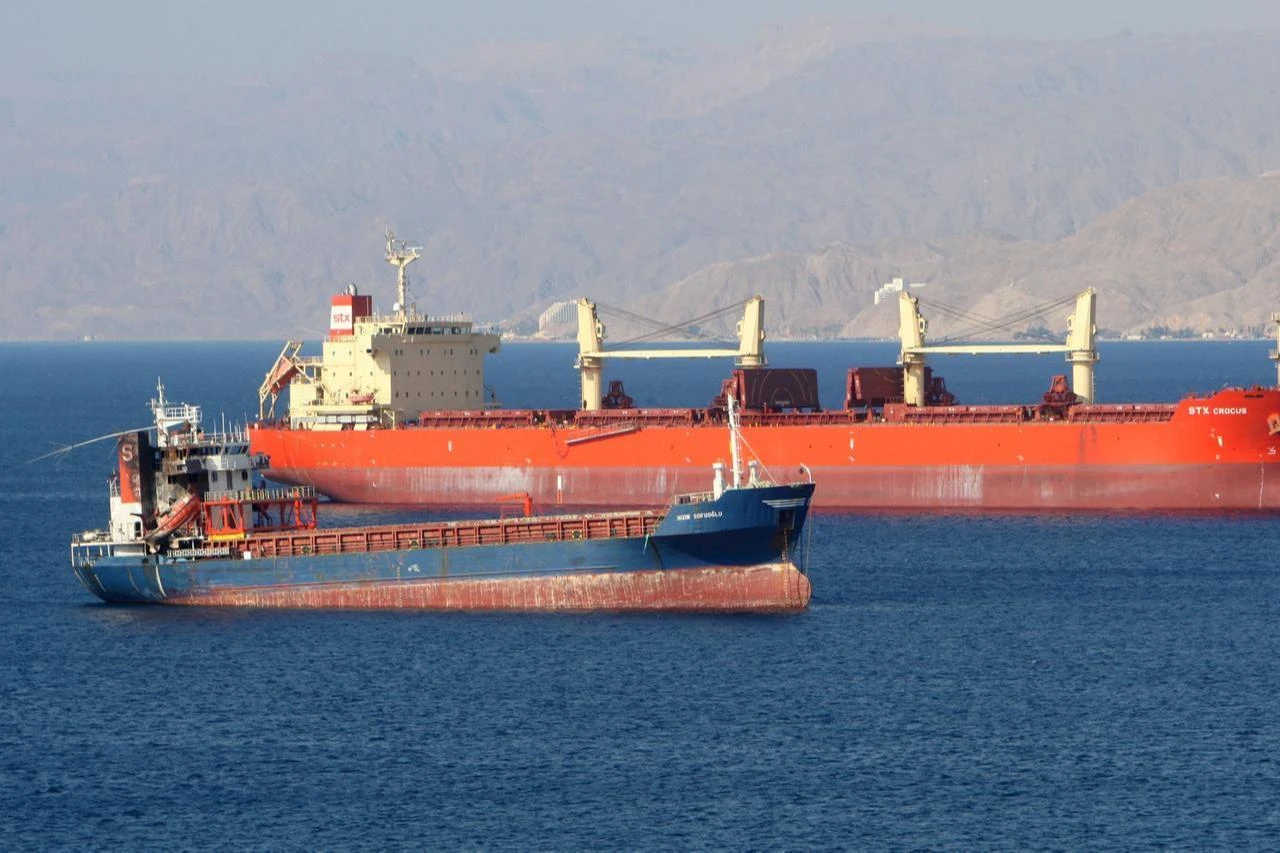
A week after announcing a naval embargo on Saudi Arabia, the Houthi movement in Yemen is thinking of charging commercial ships passing through the Bab el-Mandeb Strait fees, according to a July 29 Reuters story.
According to regional sources who spoke with Reuters on travels to Tehran in July, Houthi officials and Iranian counterparts discussed the idea, which would impact the majority of commerce through the small channel connecting the southern Red Sea with the Gulf of Aden. Iranian officials brought up the notion of taxing warships through the strait when Houthi delegates visited Iran to attend the burial of the late Supreme Leader Ali Khamenei.
Iranian Consultants Involved
According to Turkiye Today, which cited the Reuters article, Houthi delegates returned from Tehran with Iranian advisors who are assisting in the establishment of a prospective authority to control transit fees via the chokepoint. The declared goals are to put further pressure on Washington and legitimize the practice of collecting taxes on foreign waterways.
According to Reuters, the proposed arrangement would exempt Chinese ships from these payments. There was no implementation timeline provided. The foreign minister-designate of Yemen’s internationally recognized government, Afrah al-Zouba, told Reuters, “The Houthis will try to gain access over the Red Sea, and they will try to charge ships if they do.”
Increasing Disruption In The Red Sea
The proposal for a toll coincides with a growing maritime crisis. According to statistics from Kpler quoted by Reuters, ship traffic via Bab el-Mandeb dropped to just 11 commodity vessels on July 27, the lowest number in months. On July 20, the Houthis assaulted Saudi oil facilities along the Red Sea coast after declaring a blockade on Saudi Arabian ports.
According to Reuters, war-risk insurance premiums for trips via the southern Red Sea have doubled for certain businesses, going from about 0.3% of ship value prior to the Houthi embargo announcement to more than 1%. About 12% of world trade passes via the Bab el-Mandeb, and a fee system would increase expenses on top of already skyrocketing insurance premiums without necessarily blocking the route completely.
Numerous tankers have already been forced to alter their path in the Red Sea due to the Houthi campaign; instead of taking the chance of traveling along the Yemeni shore, the vessels are now heading toward the Suez Canal.